Hi, I'm
Yasiru Laksara
Machine Learning Engineer
AI & Data Science Enthusiast | CSE, University of Moratuwa

Hi, I'm
Machine Learning Engineer
AI & Data Science Enthusiast | CSE, University of Moratuwa
I am a self-motivated Machine Learning Engineer with a strong background in Computer Science and Engineering, specializing in Data Science, Machine Learning, and AI-driven application development. I enjoy building intelligent systems that combine practical software engineering with modern machine learning techniques to solve real-world problems.
My work focuses on machine learning, agentic AI, LLM applications, computer vision, and full-stack development. Through professional experience, research, and hands-on projects, I continue to build scalable, reliable, and impactful AI solutions while strengthening my expertise in modern AI and software engineering.


Specializing in Data Science and Engineering

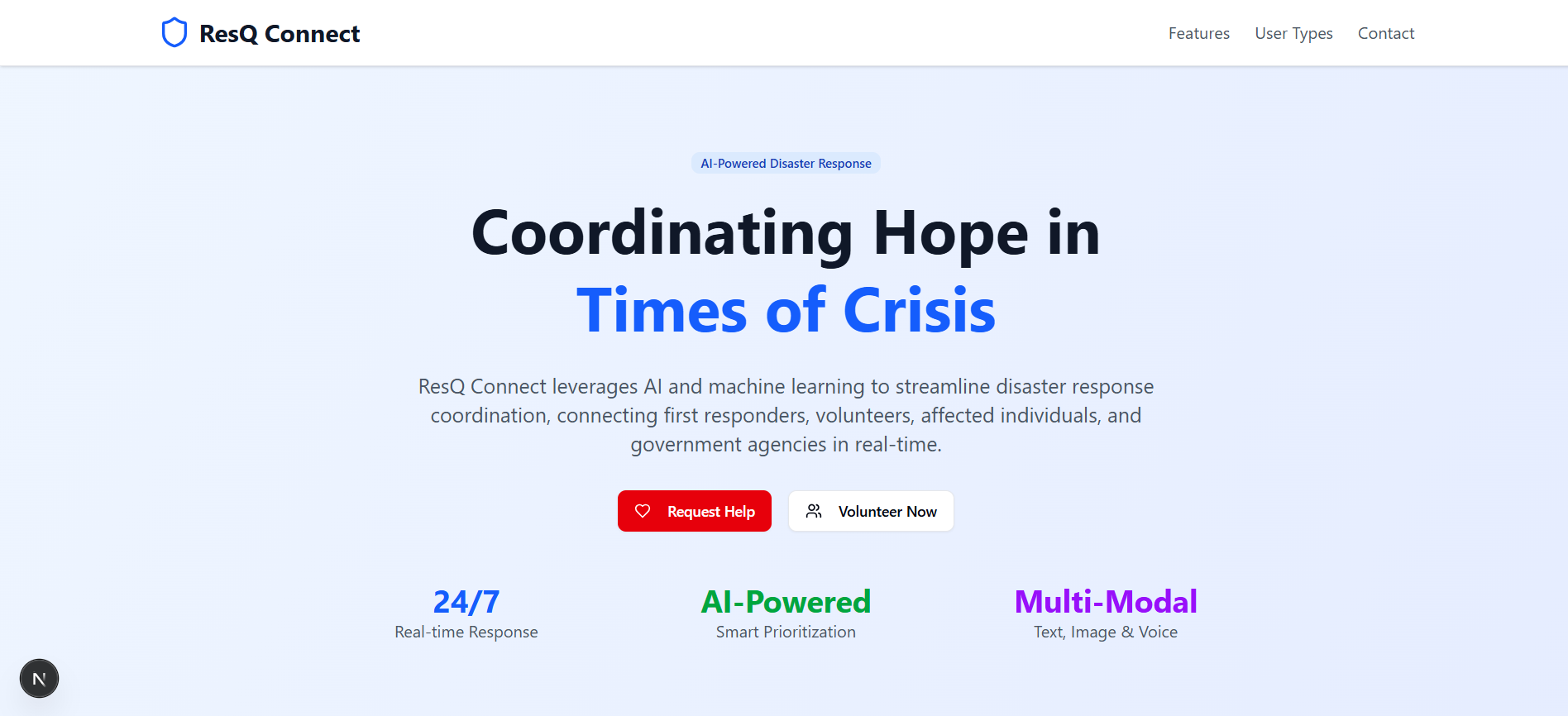
AI-Powered Disaster Response Coordination Platform
Developed an AI-powered disaster response platform that processes multimodal inputs (text, voice, and images) to capture urgent requests and route them intelligently. Built a priority-based matching engine that assigns responders based on location, skills, and urgency, with role-specific dashboards for victims, volunteers, first responders, and government agencies to ensure coordinated, safe, and efficient disaster relief operations.

AI-Powered Web Application for Early Skin Disease Detection
AI-powered web application for early detection of skin diseases including melanoma. Features a fine-tuned Xception model with metadata integration for melanoma detection and a custom CNN for six additional skin conditions. Includes an AI chatbot powered by Whisper and OpenAI API, patient and doctor dashboards with complete report history, Grad-CAM visual explanations for clinical interpretation, and secure authentication.

Machine learning model to predict habitability scores of properties for sustainable urban planning. Secured 3rd place in Kaggle competition.
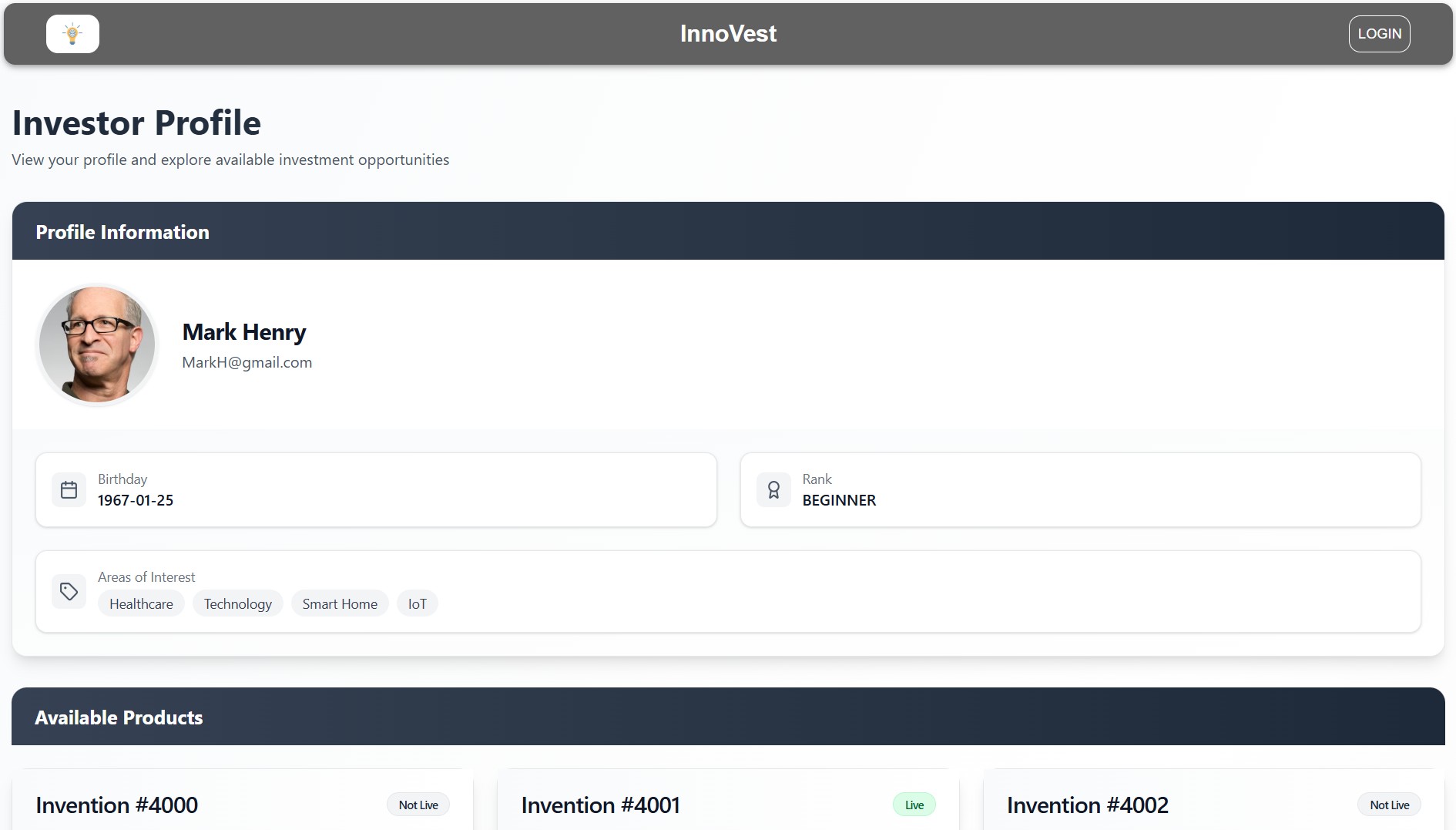
Microservices-Based Innovation Funding Platform
Built a web-based platform connecting innovators with investors through a transparent bidding system. Streamlined the funding process via automated interest-based matching, detailed product showcases, and secure payment integration for subscriptions.

Full-Stack HRMS for Enterprise Employee Management
Full-stack Human Resource Management System for Jupiter Apparels with robust MySQL database featuring automated validation triggers and optimized views. Implemented Role-Based Access Control for six user hierarchies, dynamic custom field additions, and secure authentication. Includes employee management, leave tracking with approval workflows, and advanced reporting capabilities.
Complete Interpreter for RPAL Functional Programming Language
Designed and implemented a complete interpreter for the functional programming language RPAL. Built the full execution pipeline from scratch including a custom lexical analyzer, recursive descent parser, AST construction and transformation into a Standardized Tree, and a Control Stack Environment (CSE) Machine to execute programs with support for recursion, lambda calculus, and tuple operations.
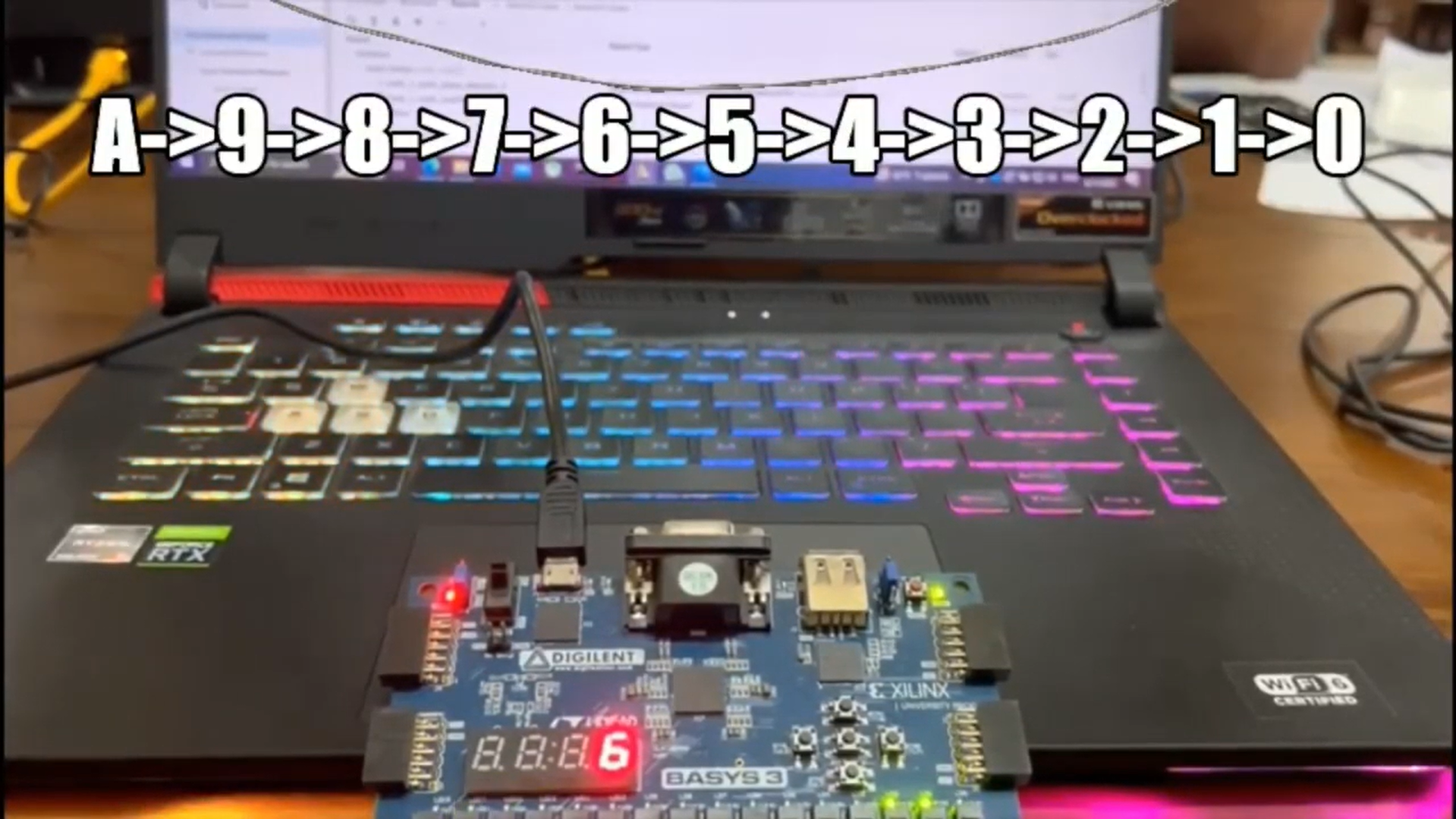
4-bit Nanoprocessor with Instruction Execution
Designed and implemented a 4-bit nanoprocessor capable of executing four instructions as part of the Computer Organization and Digital Design module. Integrated hardware components including Slow_Clk for clock management, a nanoprocessor core for instruction execution, and LUT_7seg ROM module for seven-segment display output visualization.
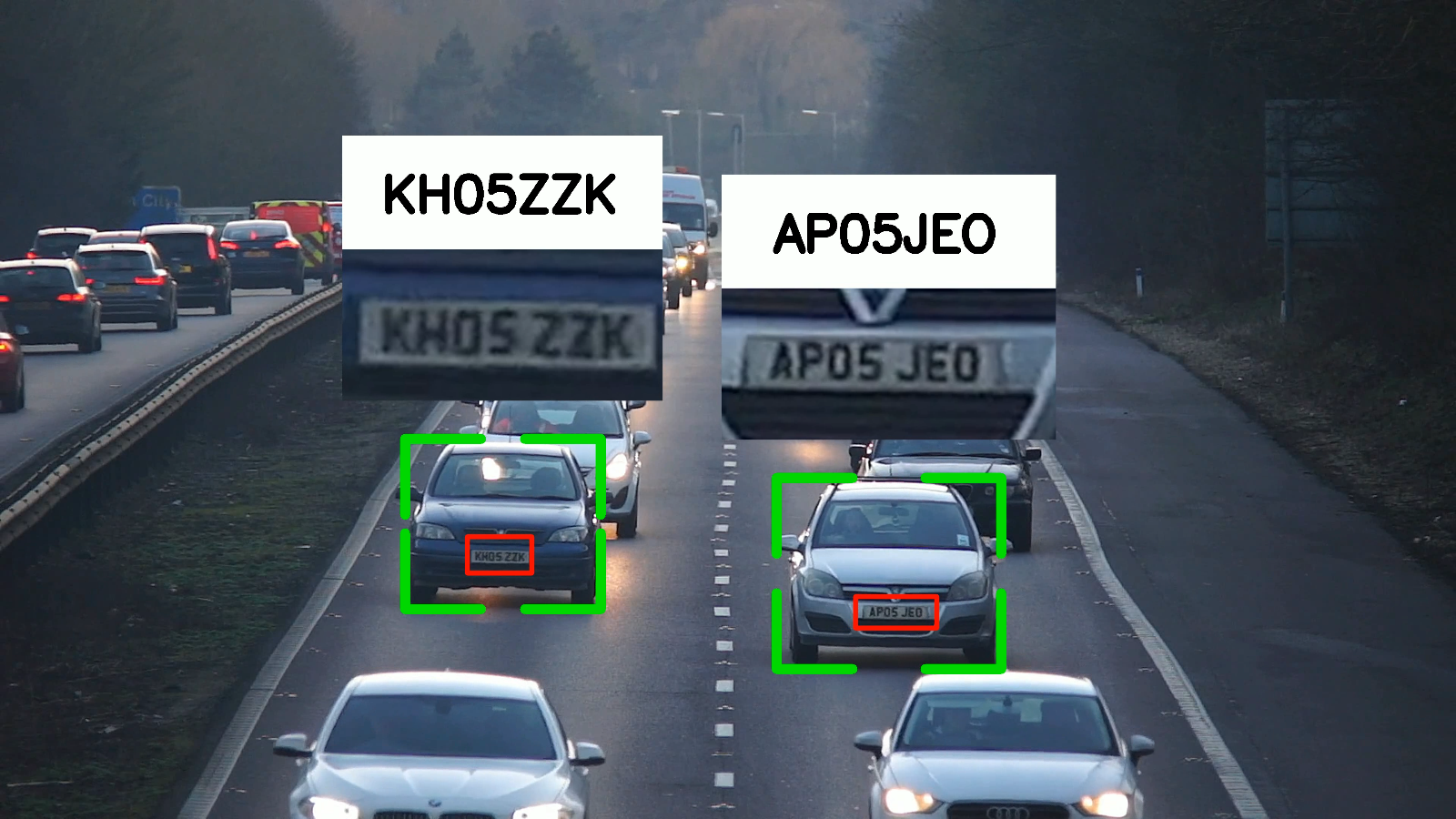
Automatic Number Plate Recognition system that processes video files to detect moving vehicles, extract license plates, and read plate numbers using OCR. Tracks vehicles using YOLOv8, performs license plate detection and decoding with EasyOCR, and exports results to CSV with annotated video output featuring bounding boxes around vehicles and plates.
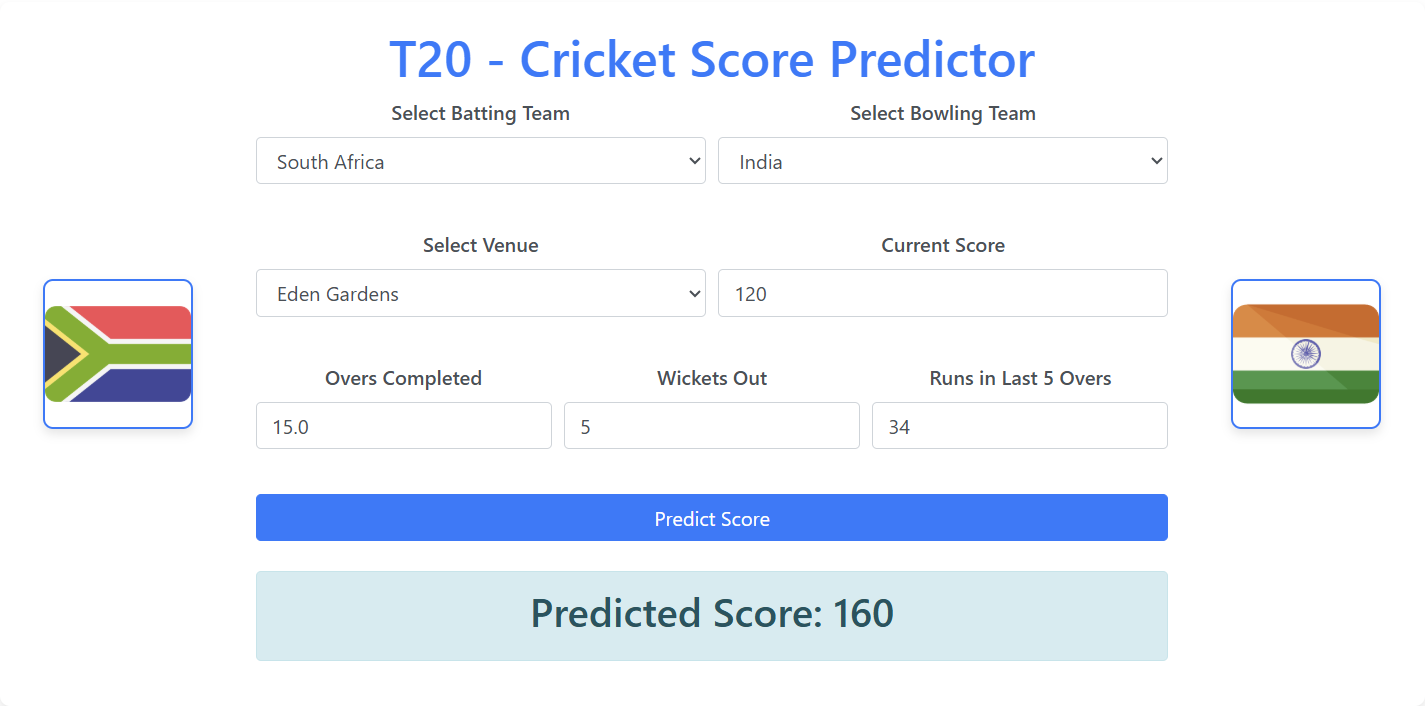
Machine learning-powered web application that predicts final T20 cricket match scores in real-time using Random Forest Regressor trained on historical match data. Analyzes key match factors including team performance, venue statistics, current score, overs completed, wickets fallen, and recent scoring trends. Supports 10 international teams across 26 major cricket venues worldwide with dynamic team logo display and responsive interface.
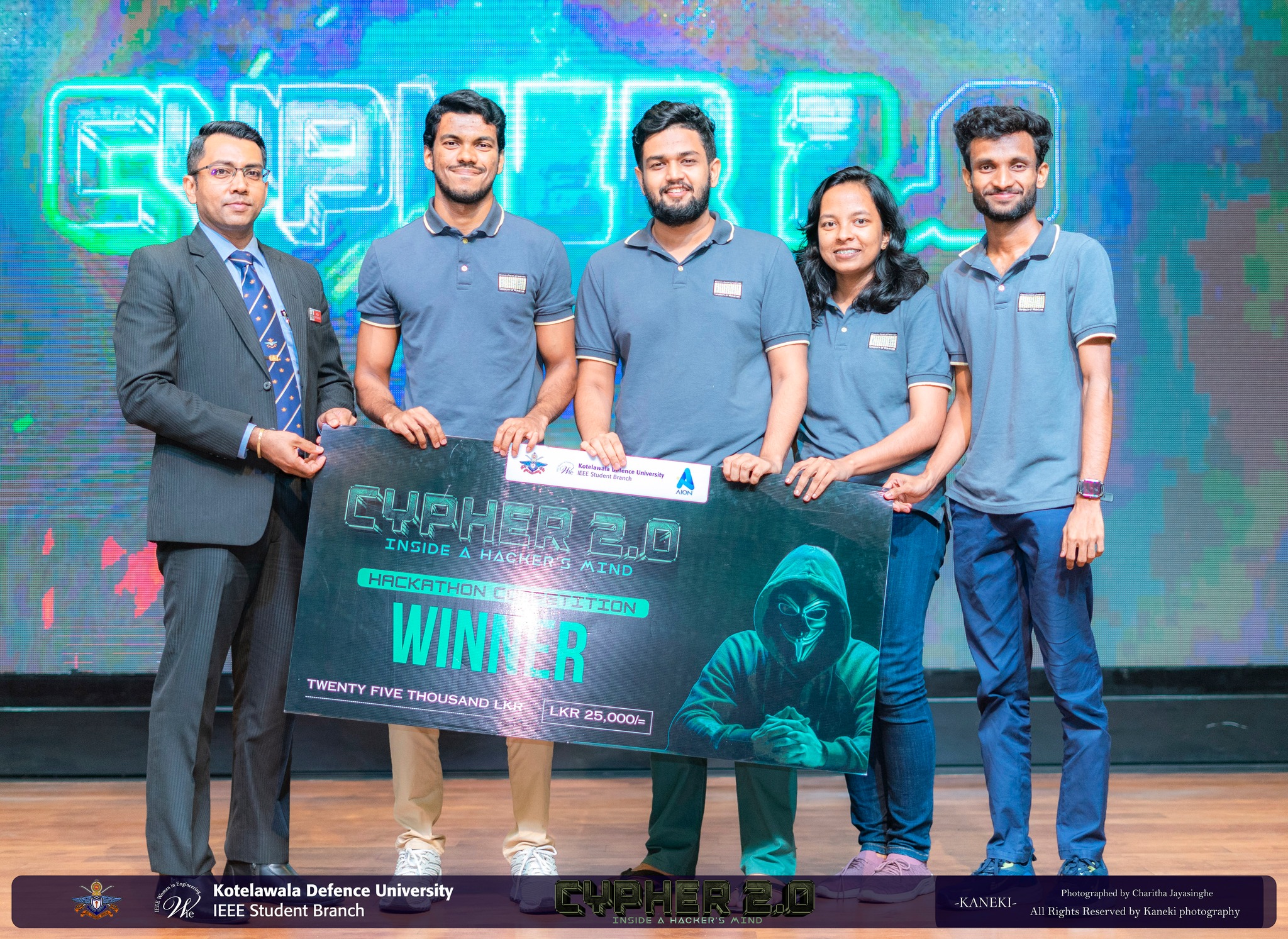
Showcased problem-solving and time management skills in a 5-hour coding challenge, securing first place as champions.
View Post →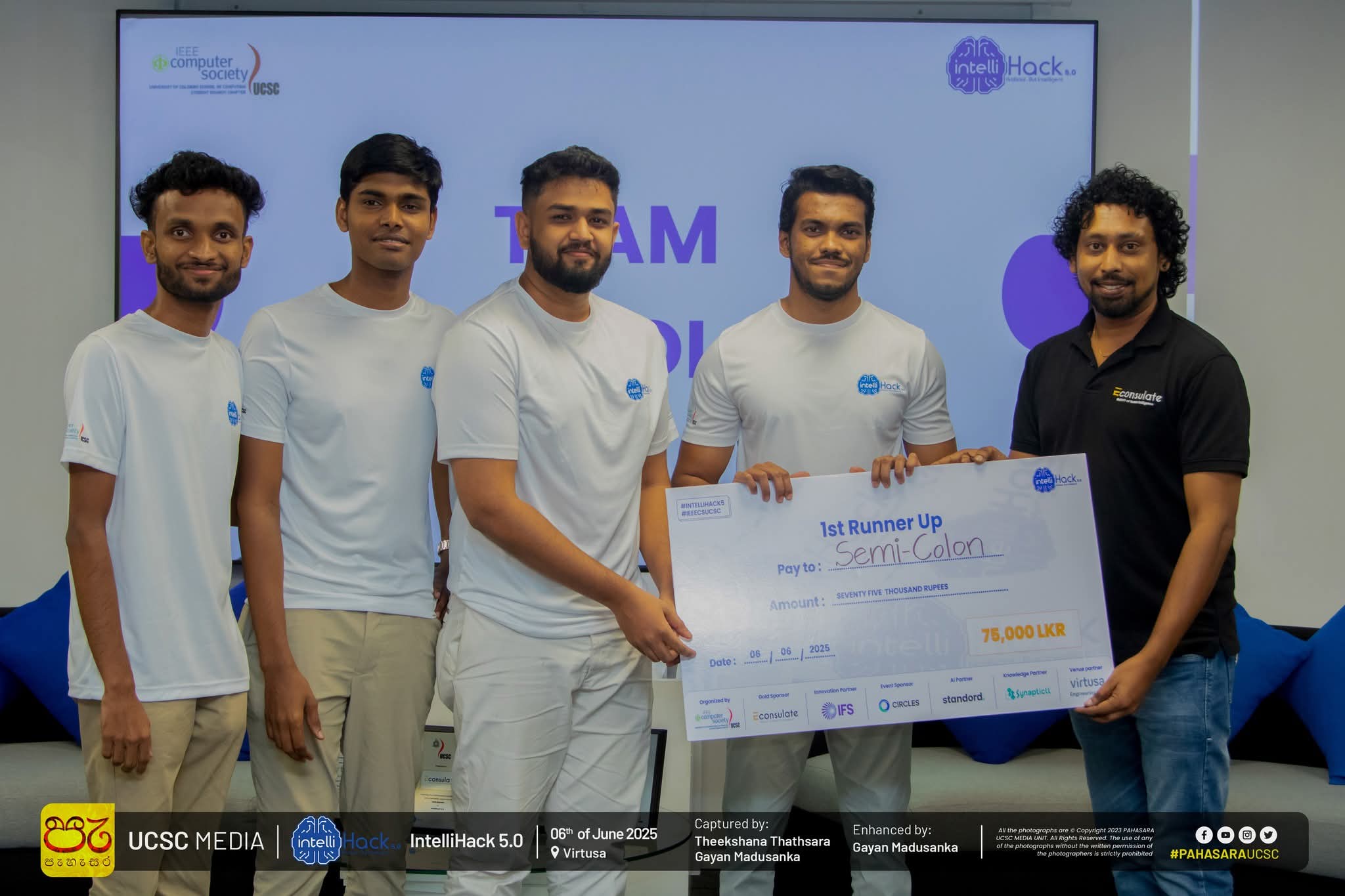
Developed an agent-based system to improve disaster response coordination, competing against over 100 teams and 350+ participants.
View Post →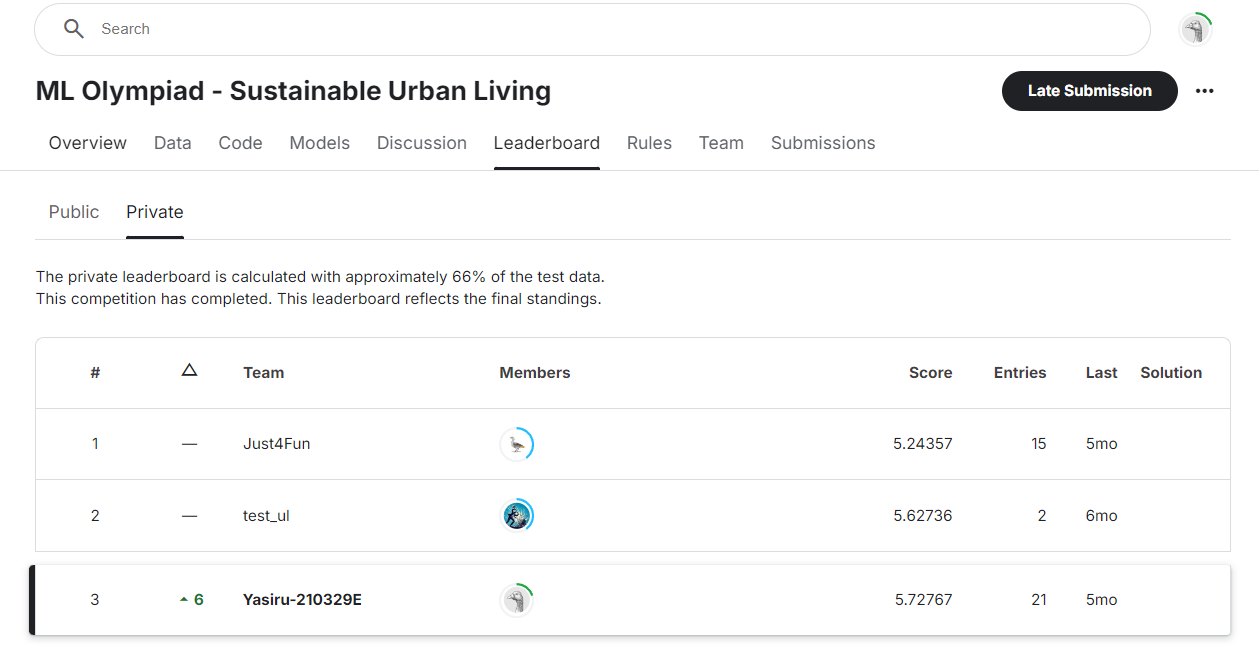
Demonstrated machine learning problem-solving skills by individually developing a model to predict property habitability scores, distinguishing myself among 120+ participants.
View Leaderboard →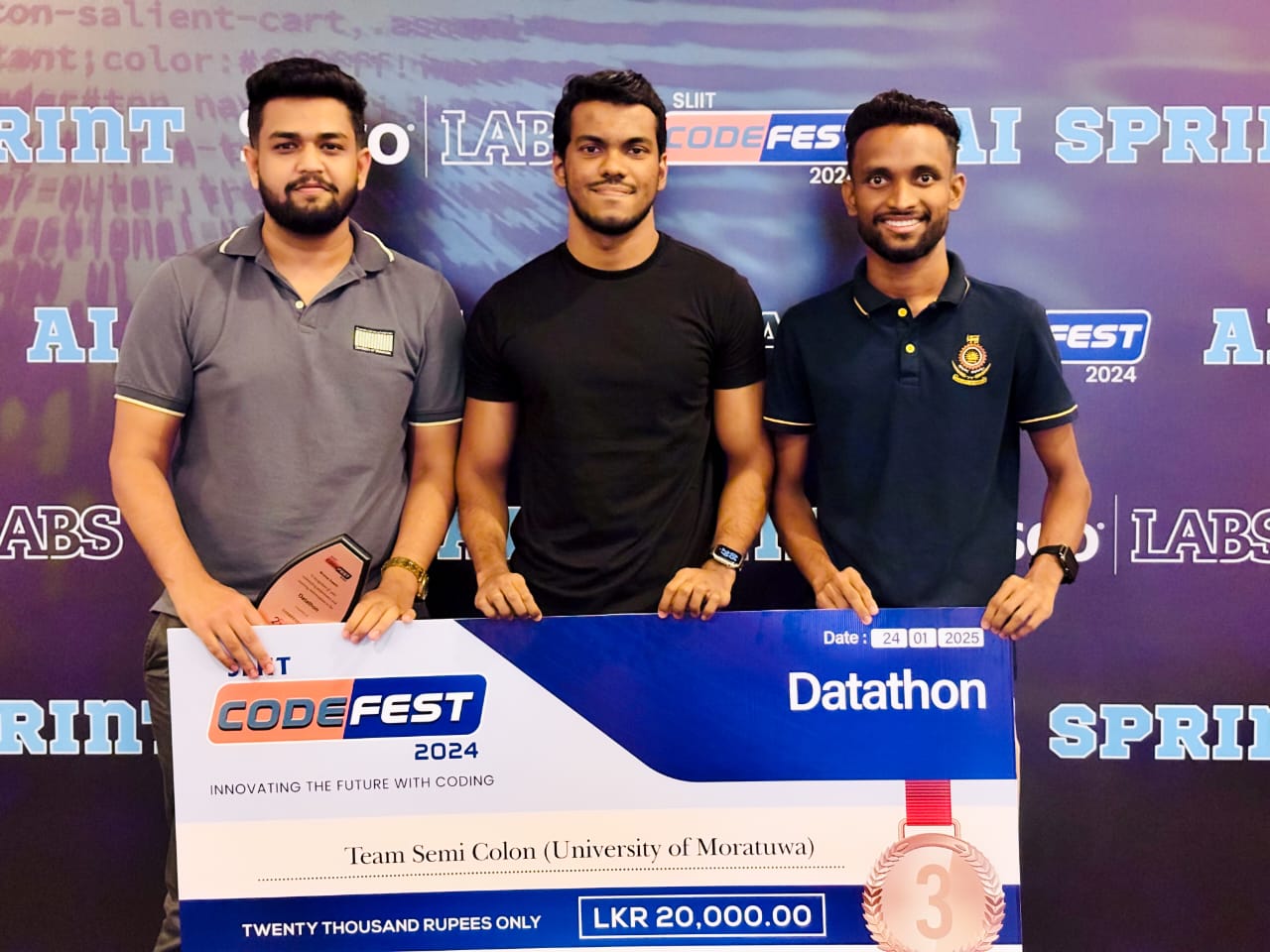
Applied machine learning, data analysis, and problem-solving skills throughout a 6-hour datathon challenge.
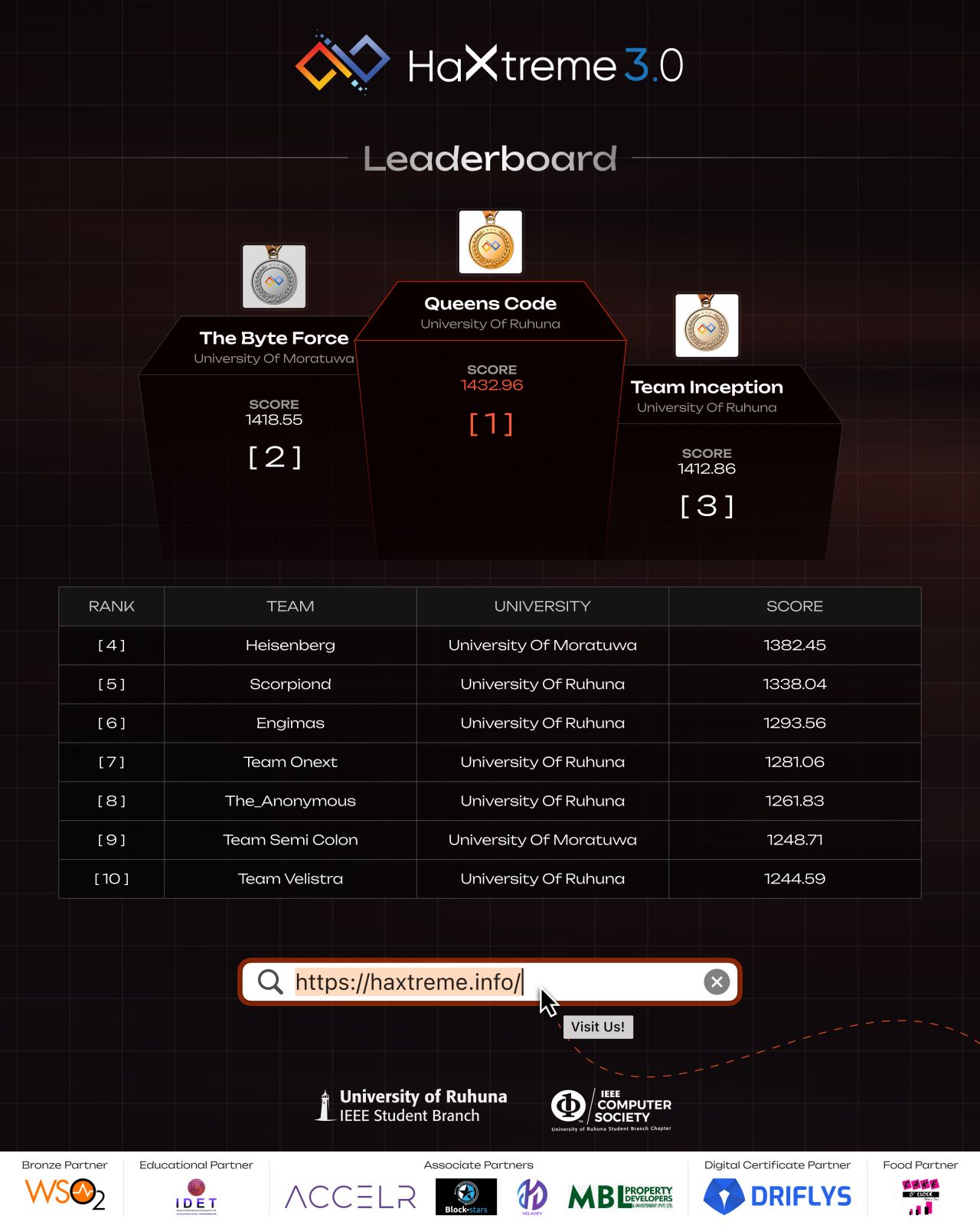
Showcased problem-solving and time management skills in a 6-hour coding challenge, excelling among 100+ competing teams.
View Post →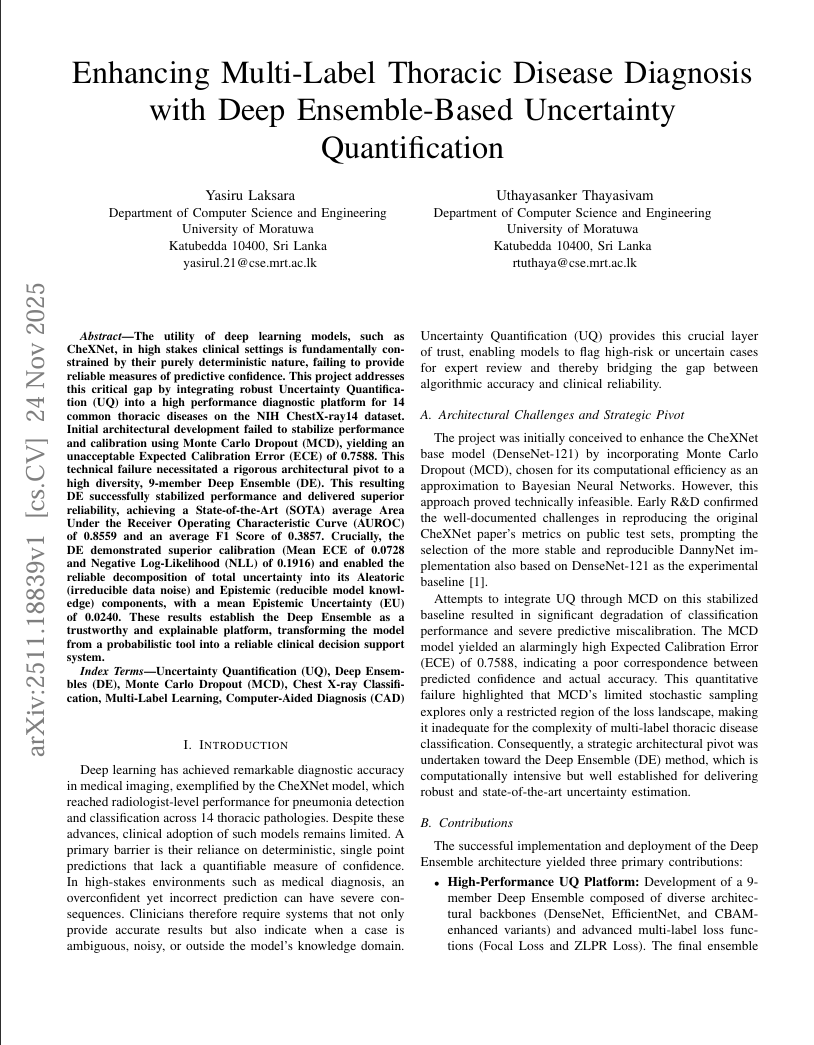
The utility of deep learning models, such as CheXNet, in high stakes clinical settings is fundamentally constrained by their purely deterministic nature, failing to provide reliable measures of predictive confidence. This project addresses this critical gap by integrating robust Uncertainty Quantification (UQ) into a high performance diagnostic platform for 14 common thoracic diseases on the NIH ChestX-ray14 dataset. Initial architectural development failed to stabilize performance and calibration using Monte Carlo Dropout (MCD), yielding an unacceptable Expected Calibration Error (ECE) of 0.7588. This technical failure necessitated a rigorous architectural pivot to a high diversity, 9-member Deep Ensemble (DE). This resulting DE successfully stabilized performance and delivered superior reliability, achieving a State-of-the-Art (SOTA) average Area Under the Receiver Operating Characteristic Curve (AUROC) of 0.8559 and an average F1 Score of 0.3857. Crucially, the DE demonstrated superior calibration (Mean ECE of 0.0728 and Negative Log-Likelihood (NLL) of 0.1916) and enabled the reliable decomposition of total uncertainty into its Aleatoric (irreducible data noise) and Epistemic (reducible model knowledge) components, with a mean Epistemic Uncertainty (EU) of 0.0240. These results establish the Deep Ensemble as a trustworthy and explainable platform, transforming the model from a probabilistic tool into a reliable clinical decision support system.



I love connecting with everyone and I'm always open to discussing new opportunities, collaborations, or innovative ideas in Data Science and Machine Learning.